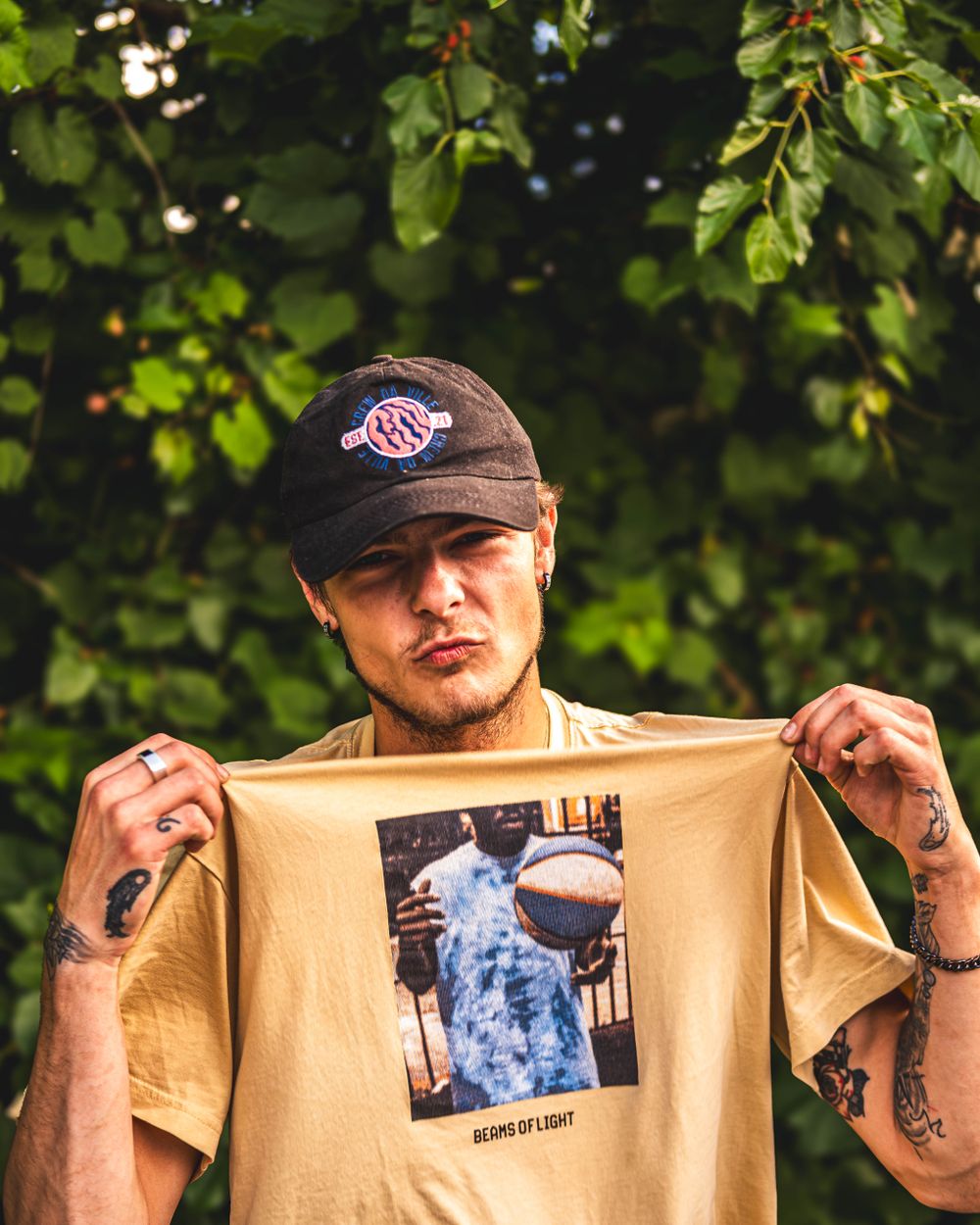
Premium Culture Denim Tears Denim Tears Tee Drop
Lượt xem:
Unpacking the Story Behind Denim Tears: How Tremaine Emory Gave Rise to a Sweeping Cultural Movement
Unlike most streetwear labels chasing hype cycles, the Denim Tears label did not begin that way. Its origin was as a declaration, a history-driven artistic gesture that used clothing as its canvas. Tremaine Emory, the mind behind the brand, has spent his working life dissolving the lines between fashion, music, and activism. Before Denim Tears existed as a company, Emory was already deeply embedded in creative circles, working alongside figures in music and design who valued substance over spectacle. That background shaped all that the label would eventually become. Rather than launching with a generic lookbook, Denim Tears arrived with a thesis: clothing can carry memory, and memory can carry weight.
The brand’s founding moment remains bound to a lone creative call that went on to become its defining mark. Emory took the cotton wreath, a symbol tied directly to the history of slavery and cotton labor in the American South, and printed it across denim garments. This was not decoration for decoration’s sake. Intentionally provocative, it compelled those who wore it and those who saw it to grapple with a visual vocabulary rarely seen in fashion. Almost overnight, that one motif turned a small independent label into a cultural flashpoint.
Denim Tears: The Founding Vision Behind It
Emory has consistently framed Denim Tears as less a conventional label than a traditional apparel company. Emory’s method drew on conceptual art practices, where meaning is prioritized over the message it carries. Denim, as a fabric, held particular significance because of its links to the history of American labor, workwear, and later 20th-century youth rebellion. By taking denim back and layering the cotton wreath motif onto it, Emory shaped a garment that doubled buy sweatpants as clothing, protest, and historical document all at once.
Rather than mass production runs, the label’s first drops were rolled out through limited runs, purposefully kept limited. Such exclusivity was not merely a promotional strategy; it mirrored the actual situation facing an self-driven creator building something from the ground up without the support of a big-name fashion house. Every item seemed deliberate, closer to a collectible object rather than a seasonal product. This guiding approach has stayed steady even as the brand’s public profile has expanded significantly since its earliest days.
Thanks to Emory’s track record as a creative consultant and cultural connector, he secured entry to collaborators that the bulk of rising designers could hardly ever get close to. He had worked with major music labels, dressed artists, and built connections across the worlds of hip-hop and contemporary art. Denim Tears became the outlet through which he could finally centralize his individual point of view, rather than boosting another person’s label or creative vision. That move from partner to principal marked a pivotal moment not just for Emory on a personal level, but for how the fashion world came to see designer-driven narrative work.
The Cotton Wreath and Its Cultural Weight
That wreath-of-cotton imagery remains the most identifiable element of the Denim Tears identity, and its significance has never been diluted for the sake of easy selling. Cotton fields stand for one of the most harrowing periods of American history, tied directly to forced labor and trauma passed down through generations. It was deliberately discomfiting when Emory decided to present this imagery as a repetitive, near-ornamental pattern. It compelled shoppers to sit with unease rather than look away from it, which is a unusual demand for a fashion brand to make of its following.
This symbol has shown up throughout a broad array of product categories, from denim jeans and jackets to sweatshirts and accessories, each time driving home the same thread of history. Unlike a one-off graphic, the wreath operates as the brand’s defining visual mark — much like how other labels depend on a logo or monogram. Only in this case, the signature carries generations of weight rather than a manufactured company myth.
Among streetwear’s evolution, critics and cultural commentators have highlighted the wreath as one of its more significant symbols. It rests at the intersection of fashion, protest art, and a public lesson in history, which is an atypical combination for a garment sold through limited drops and collaborations. This iconography has ignited dialogue far beyond fashion circles, surfacing within academic discussions about how commercial products can carry serious historical narratives without flattening them into surface-level style.
Partnerships That Extended the Message
Denim Tears has forged relationships with major players in both fashion and sport, using collaboration as a way to widen its footprint without departing from its core message. Partnerships with established denim companies gave Emory the opportunity to apply his cotton wreath concept to instantly familiar silhouettes, opening up a dialogue between heritage American workwear and the very history that made that industry possible. These collaborations were never just logo substitutions; they were deliberately shaped extensions of the brand’s foundational idea.
Sneaker partnerships have likewise let the label extend its visual vocabulary toward the sneaker space, reaching audiences who might never have encountered it through apparel on its own. These releases, propelled by the collaborating partner’s cultural prestige as well as the instantly identifiable gravity of the Denim Tears aesthetic, would sell through fast. Since the sneaker world often moves faster and reaches wider than clothing-only releases, sneaker collaborations, in particular, tend to introducing a point of view to wholly different groups.
Music has stayed an ongoing thread running through its history of joint projects, unsurprising given Emory’s background in that industry. Album-linked capsule drops paired with artist partnerships have let Denim Tears to operate much like an audio counterpart to certain cultural moments, rather than a standalone clothing line. Thanks to this blended strategy, the brand has managed to avoid the trap so many streetwear labels stumble into, where hype eventually outpaces substance and the message gets lost.
Denim Tears in 2026: Where the Label Sits Now
Heading into 2026, Denim Tears continues to operate with the same core identity it launched with, even as its commercial footprint has expanded considerably. The brand maintains a rhythm of seasonal drops alongside ongoing collaborative projects, balancing scarcity with growing demand. Emory has remained the creative force steering every release, resisting the kind of anonymous studio-led design process that has diluted many streetwear labels after they scale.
Availability at retail has expanded beyond the label’s own proprietary sales channels, with carefully chosen stockists stocking pieces alongside other culturally weighty labels. This distribution strategy keeps Denim Tears positioned within a curated retail ecosystem rather than the mass-market space, preserving the sense that owning a piece means something beyond simple consumption. That same posture has also been mirrored in resale markets, where particular early drops and collaborative pieces draw considerable premiums over the initial retail price owing to restricted original run sizes.
The brand’s influence can now be traced through countless other designers who have adopted historically grounded storytelling as a legitimate creative strategy. What once felt like a singular, almost risky approach has become a broader movement within contemporary fashion, one where designers increasingly view clothing as a vehicle for cultural education rather than pure commerce. Denim Tears did not invent this idea entirely, but it proved decisively that the approach could resonate commercially while remaining intellectually and emotionally uncompromised.
Denim Tears Set Against Other Culturally Driven Names in Fashion
Getting a clear sense of where Denim Tears sits within the larger streetwear and culturally driven fashion landscape helps pin down what makes its way of working distinct. The chart that follows maps out a general comparison across a few core attributes, grounded in publicly known brand positioning and release habits.
| Defining Feature | Denim Tears | Typical Streetwear Label | Heritage Denim Brand |
|---|---|---|---|
| Foundational Origin Idea | Storytelling rooted in history by way of the cotton-wreath graphic | Logo-driven identity and cycles of hype | Work-oriented utility and durability |
| Release Strategy | Restricted-run launches combined with major collaborations | Regular seasonal drops | Continuous catalog with occasional refreshes |
| Chief Cultural Anchor | American slavery history and cotton labor | Skateboarding, music, or local youth movements | Labor from the industrial age and the history of denim production |
| Founder’s Role | Tremaine Emory personally oversees artistic direction | Differs case by case, typically studio or committee led | Commonly company design departments |
The Enduring Impact of Tremaine Emory’s Vision
What distinguishes Denim Tears from a strictly business-minded vantage point is its refusal to separate the product from the message, despite the fact that the label has expanded. Many labels launch on a compelling idea and steadily weaken it as interest rises and mass appeal becomes tempting. Rather than letting the cotton wreath’s historical resonance slip into a quietly forgotten origin story, Emory has kept it consistently central.
Emory’s broader career, including his work as a creative director across various projects, has reinforced his reputation as someone unwilling to compromise message for margin. Few streetwear labels earn the kind of critical respect Denim Tears has gained through this consistency, positioned as it is at the uncommon crossing of market viability and genuine creative intent. Its partnerships with well-known figures have never come across as revenue-driven alone; every collaboration appears selected for how it carries the brand’s core story to fresh audiences.
As 2026 unfolds, Denim Tears stands as one of the clearest examples of how fashion can function as both commerce and cultural commentary without one undermining the other. Compared with heritage fashion houses, its timeline is short, yet its mark on narrative-driven design has already proven enduring. More than a clothing brand, what Tremaine Emory built is a framework for treating fabric as a carrier of memory—one other designers keep studying and drawing on as they chart their own creative directions.